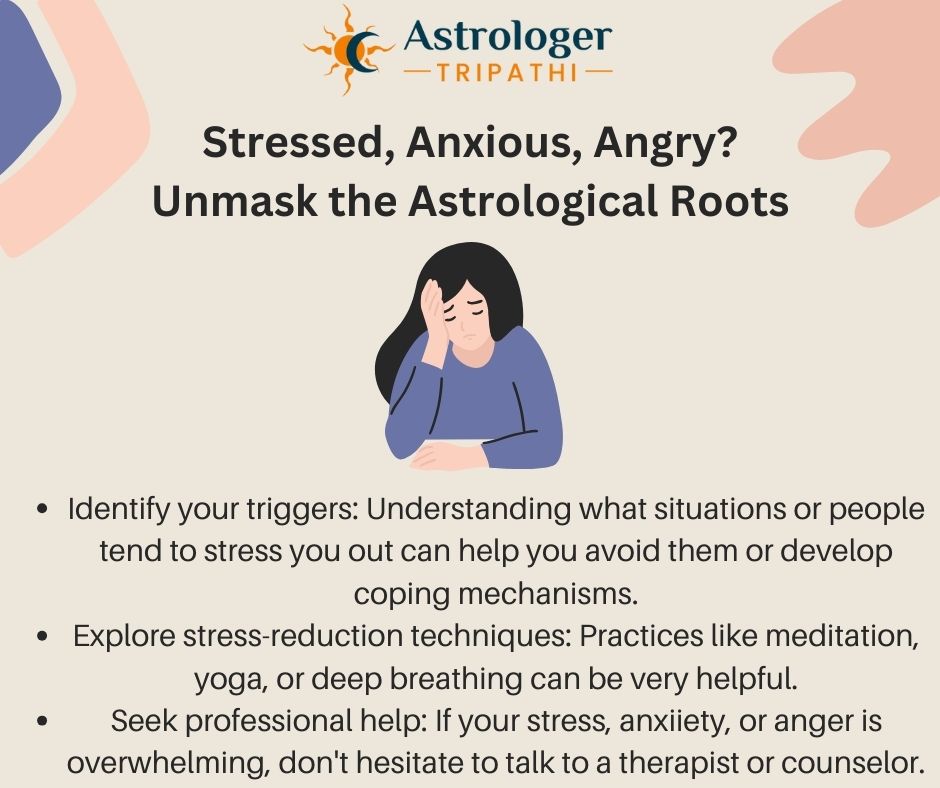


Do you wake up tired even after a full night of sleep? Does your mind race at midnight, replaying conversations and rehearsing worries that never arrive? In Vedic astrology, this state of chronic mental depletion — what earlier generations called nervous exhaustion — often traces back to one silent culprit: an afflicted Moon in astrology. The Moon, or Chandra, governs the mind (Manas), emotions, memory, and the nervous system itself. When this luminary is wounded in the birth chart, the mind loses its natural buoyancy, and even ordinary responsibilities begin to feel like mountains.
In this detailed guide, we will explore what an afflicted Moon really means, the classical combinations that produce nervous exhaustion, how to identify these patterns in your own kundli, and the practical, time-tested remedies that can help you rebuild emotional resilience. Whether you are a student of Jyotish or someone quietly struggling with burnout, this article will give you a compassionate, structured roadmap.
What Is an Afflicted Moon in Astrology?
An afflicted Moon in astrology refers to a Moon that is weakened, obstructed, or harassed in the natal chart. Affliction is not a single condition; it is a spectrum. The Moon may be conjunct or aspected by natural malefics such as Saturn, Mars, Rahu, or Ketu. It may sit in difficult houses — the 6th, 8th, or 12th. It may be waning and close to the Sun (a dark or combust Moon), stripped of its reflective brilliance. Or it may stand utterly alone, with no planets flanking it, forming the infamous Kemadruma Yoga.
Classical texts like Brihat Parashara Hora Shastra and Phaladeepika treat the Moon as the karaka of the mind and the mother. A strong Moon gives a person the ability to absorb life’s shocks the way a full reservoir absorbs a stone — with ripples, not floods. An afflicted Moon, by contrast, is a shallow pond. Every pebble creates a storm. This is why two people can face identical circumstances, yet one recovers overnight while the other lies awake for weeks.
It is important to remember that affliction does not mean doom. It means the mind requires conscious care, structure, and remedial support — much like a sensitive instrument that performs beautifully once it is properly tuned.
Chandra as Manas: Why the Moon Governs Your Nervous System
Vedic philosophy draws a direct line between the Moon and Manas — the perceiving, feeling, reacting layer of the mind. The Sun is the soul (Atma); it knows who you are. The Moon is the mind; it decides how you feel about who you are. This distinction matters enormously when we talk about nervous exhaustion.
Nervous exhaustion — known in older medical literature as neurasthenia — is not ordinary tiredness. It is the depletion of the mind’s capacity to process stimulation. Symptoms typically include mental fog, irritability over small triggers, disturbed sleep, emotional numbness alternating with sudden tearfulness, digestive sensitivity, and a persistent feeling of being “switched on” yet drained. Astrologically, every one of these symptoms maps onto lunar significations: sleep, mood, fluids, digestion (through the 4th house connection), and emotional processing.
When we study Moon and mental health astrology seriously, we are really studying the chart’s capacity for recovery. A well-placed Moon recovers; an afflicted Moon accumulates. Stress that should drain away instead settles into the nervous system, layer upon layer, until the person one day announces, “I just can’t anymore” — and genuinely means it.
Signs of Nervous Exhaustion Linked to a Weak or Malefic Moon
How does lunar affliction actually feel from the inside? Over years of chart consultations, the same cluster of experiences appears again and again in natives with a compromised Chandra. See how many of these resonate with you:
- Unrefreshing sleep: You sleep seven or eight hours yet wake up as tired as when you lay down, because the mind never truly powered off.
- Emotional weather: Moods shift several times a day without external cause — buoyant at breakfast, hollow by afternoon, tearful by night.
- Decision fatigue: Even small choices — what to eat, which message to answer first — feel disproportionately heavy.
- Sensory overload: Noise, crowds, and bright light exhaust you faster than physical labour ever does.
- Rumination loops: The mind replays old conversations and rehearses imaginary confrontations, especially between midnight and 3 a.m.
- Water retention and digestive sensitivity: The Moon rules bodily fluids and the stomach; emotional strain often shows up physically here first.
- Homesickness of the soul: A vague longing for comfort that no place or person fully satisfies — the signature ache of a wounded Chandra.
Individually, each sign is ordinary. Together, and persisting for months, they sketch the unmistakable portrait of lunar depletion. The chart then tells us why — and, more importantly, until when and what to do.
Seven Classical Causes of an Afflicted Moon
Before diagnosing nervous exhaustion in a chart, an astrologer checks the Moon against these seven conditions. The more conditions present simultaneously, the deeper the affliction.
- Conjunction with malefics: Saturn, Rahu, Ketu, or Mars sitting with the Moon directly colours the mind with their nature — fear, obsession, detachment, or agitation respectively.
- Malefic aspects: Even from a distance, Saturn’s 3rd, 7th, or 10th aspect, or Mars’s 4th and 8th aspect on the Moon, creates chronic pressure on the emotional body.
- Placement in dusthana houses: The Moon in the 6th, 8th, or 12th house channels mental energy into conflict, crisis, or isolation.
- Waning and dark Moon (Ksheena Chandra): A Moon within a few tithis of Amavasya carries very low Paksha Bala, reducing emotional stamina.
- Combustion: A Moon too close to the Sun is overpowered — the ego dominates the feelings, and the person suppresses emotions until they erupt as exhaustion.
- Debilitation: The Moon in Scorpio (Vrishchika) dives into emotional depths without a ladder, producing intensity, suspicion, and rumination.
- Kemadruma Yoga: No planets in the 2nd and 12th houses from the Moon leaves the mind unsupported — a classical signature of loneliness and mental fatigue.
A single condition, especially with benefic support from Jupiter or Venus, rarely causes serious trouble. Nervous exhaustion appears when three or more conditions stack, and the relevant dasha activates them.
Planetary Combinations Behind Nervous Exhaustion
Let us now examine the specific afflictions and the distinct flavour of mental fatigue each one produces. Recognising your pattern is half the remedy.
1. Moon–Saturn Conjunction: The Heavy Mind
Chandra–Shani Yuti, or the Vish Yoga, is perhaps the most discussed combination in Moon and mental health astrology. Saturn is slow, cold, and dutiful; the Moon is quick, warm, and receptive. Together, they produce a mind that takes everything seriously and releases nothing. The native often carries responsibility from a young age, feels guilty when resting, and experiences low-grade melancholy that outsiders mistake for maturity.
The nervous exhaustion here is of the grinding type — not dramatic collapse, but a decade-long erosion. Sleep becomes shallow, joy feels like a luxury, and the person keeps functioning while quietly running on empty. If this pattern sounds familiar, read our in-depth analysis of the Moon–Saturn Conjunction (Chandra–Shani Yuti) on astrologertripathi.com, where we cover house-wise results and targeted Shani–Chandra remedies.
2. Moon–Rahu Conjunction: The Racing Mind
Rahu amplifies and distorts whatever it touches. With the Moon, it produces an over-stimulated psyche — obsessive thinking, phantom fears, sudden phobias, and a compulsive attraction to screens, news, and stimulation. This is the modern epidemic combination: the mind that cannot stop scrolling at 2 a.m. even while begging for rest.
Nervous exhaustion under Moon–Rahu feels electric — wired but tired. The person may experience heart palpitations during stress, vivid disturbing dreams, and a sense of unreality during peak anxiety. These effects intensify dramatically during Rahu’s planetary periods; our complete guide to the Rahu Mahadasha on astrologertripathi.com explains how to navigate these eighteen transformative years.
3. Moon–Ketu Conjunction: The Detached Mind
Ketu with the Moon creates emotional dissociation. The person feels cut off from their own feelings — present in body, absent in spirit. Past-life grief, unexplained sadness, and difficulty forming emotional attachments are common. Nervous exhaustion here manifests as numbness: the native does not feel stressed, yet the body shows every symptom of it, from digestive trouble to chronic fatigue.
4. Moon–Mars Affliction: The Inflamed Mind
Mars aspecting or joining the Moon heats the emotional waters. The result is irritability, impatience, snap decisions, and anger that regrets itself minutes later. This combination burns through nervous energy the way a bonfire burns through kindling — fast and hot. The exhaustion arrives suddenly, often after a period of intense productivity, and can include tension headaches and muscular stiffness.
5. Ksheena Chandra and Combust Moon: The Dimmed Mind
A dark Moon born near Amavasya lacks reflective strength. Such natives are deeply sensitive but poorly insulated; crowds drain them, criticism wounds them disproportionately, and they need far more solitude to recover than others realise. Combustion adds another layer — the Sun’s proximity makes the person suppress feelings to appear strong, which is precisely the psychological recipe for eventual burnout.
6. Kemadruma Yoga: The Unsupported Mind
When no planets occupy the signs on either side of the Moon, the mind has no neighbours — no counsel, no cushion. Classical texts describe Kemadruma natives as prone to poverty and sorrow, but the modern reading is more precise: they feel chronically unsupported, even when surrounded by family. This perceived isolation is a slow-drip source of nervous exhaustion. Fortunately, many cancellations (bhanga) of Kemadruma exist, and a skilled astrologer should always check them before pronouncing judgement.
Afflicted Moon Through the Houses: Where the Fatigue Strikes
The house occupied by the afflicted Moon tells you which life area drains the mind fastest. Understanding this helps you ration your emotional energy wisely. These malefic Moon effects express differently in each bhava:
- 1st House: The exhaustion is constitutional — moodiness, fluctuating health, and over-identification with every passing emotion.
- 4th House: Domestic stress becomes the drain; home, which should recharge, instead depletes. Issues concerning the mother or property weigh on the heart.
- 6th House: Workplace conflict, health anxieties, and debts gnaw at peace of mind. Our article on 6th house debt astrology at astrologertripathi.com explores this axis of worry in detail.
- 8th House: Sudden emotional upheavals, fear of loss, and deep psychological churning; the classic placement for anxiety that has no nameable cause.
- 10th House: Career pressure and public image become the treadmill; the native cannot switch off after work.
- 12th House: Sleep disturbance, escapism, and isolation; the mind leaks energy through worry about distant or hidden matters.
The Nakshatra Dimension: Where Your Moon Truly Lives
Signs and houses tell only part of the lunar story. The Moon’s nakshatra — the 13°20’ lunar mansion it occupies — refines the diagnosis considerably. Two people with Moon in Cancer can have vastly different mental constitutions depending on whether that Moon sits in nurturing Pushya or in serpentine, secretive Ashlesha.
Certain nakshatra placements deserve special attention when nervous exhaustion is the complaint. A Moon in gandanta — the karmic knots at the junctions of water and fire signs (Revati–Ashwini, Ashlesha–Magha, Jyeshtha–Moola) — carries deep, inherited emotional turbulence that surfaces during nodal dashas. Moons in Rahu-ruled nakshatras (Ardra, Swati, Shatabhisha) are naturally prone to over-stimulation and benefit enormously from digital detox practices. Moons in Saturn-ruled nakshatras (Pushya, Anuradha, Uttara Bhadrapada) handle pressure well but tend to postpone rest until the body forces the issue.
The nakshatra also determines the starting Mahadasha of the entire life through the Vimshottari system — which means your birth Moon quietly scripted the sequence of every planetary period you will ever experience. This is why serious lunar analysis always begins at the nakshatra level, not merely the sign.
Timing the Breakdown: Dashas and Transits That Trigger Nervous Exhaustion
An afflicted natal Moon is a loaded pattern, but it needs a trigger to fire. In practice, nervous exhaustion peaks during specific planetary periods:
- Moon Mahadasha or Antardasha of an afflicted Moon, when the wounded significator takes centre stage.
- Saturn’s Sade Sati — the seven-and-a-half-year transit of Saturn over the natal Moon — which tests emotional endurance in three distinct phases.
- Rahu or Ketu dashas when the nodes are conjunct or aspecting the natal Moon.
- Kantaka Shani and Ashtama Shani transits, when Saturn moves through the 4th or 8th house from the Moon.
Sade Sati deserves a closer look, because it is the single most common trigger of lunar exhaustion in practice. In its first phase (Saturn in the 12th from the Moon), sleep and expenditure suffer; the drain is quiet and easily ignored. In the second phase (Saturn over the natal Moon itself), emotional pressure peaks — responsibilities multiply exactly when resilience is lowest, and this is when most natives seek help. The third phase (Saturn in the 2nd from the Moon) tests family harmony and self-worth even as the inner storm begins to settle. Knowing which phase you are in transforms vague suffering into a mapped journey with a visible exit.
Consider a typical consultation pattern: a professional in their early thirties, natal Moon in Scorpio with Saturn’s aspect, enters the second phase of Sade Sati while also running a Moon Antardasha. Within months, the classic triad appears — broken sleep, workplace friction, and a strained relationship with the mother. Nothing catastrophic occurs, yet everything feels heavier. Once the timing is explained and remedies begin, the same circumstances remain — but the native reports feeling “thirty per cent lighter” within two lunar cycles. The chart did not change; the relationship with it did. That is precisely how remedial astrology works.
If you are currently in one of these windows and recognise the symptoms described above, do not panic. These periods are finite, purposeful, and highly responsive to remedies — which brings us to the most important section of this article.
Weak Moon Remedies: Rebuilding Your Mental Reservoir
The beauty of Jyotish is that diagnosis always comes paired with treatment. The following weak Moon remedies and Chandra Dosha remedies have been prescribed for centuries. Choose the ones that suit your temperament and circumstances, and practise them with consistency rather than intensity — the Moon responds to rhythm, not force.
Mantra and Spiritual Remedies
- Chandra Beej Mantra: Chant “Om Shraam Shreem Shraum Sah Chandraya Namah” 108 times, ideally on Monday evenings, for a minimum of 40 days.
- Shiva worship: Lord Shiva wears the crescent Moon on his head; offering water or milk to the Shivling on Mondays directly pacifies Chandra.
- Somvar Vrat: A gentle Monday fast — fruits and milk — disciplines the mind while honouring the Moon’s day.
- Chandra Namaskar: The lunar counterpart of Surya Namaskar, practised in the evening, calms an over-stimulated nervous system.
Charity and Behavioural Remedies
- Donate white items: Rice, milk, white cloth, sugar, or silver, given on Mondays to those in need.
- Serve and respect your mother and elderly women; the Moon is the karaka of the mother, and healing that relationship heals the Moon itself.
- Feed birds freely: Scatter grain for free birds; classical tradition warns against caging birds when the Moon is weak.
- Spend time near water: Rivers, lakes, or even mindful bathing rituals restore lunar energy — water is the Moon’s element.
Gemstone and Lifestyle Remedies
- Pearl (Moti): Set in silver and worn on the little finger — but only after chart-specific consultation, because a pearl amplifies the Moon, and an amplified afflicted Moon can worsen anxiety. Never self-prescribe gemstones.
- Silver: Wearing a plain silver chain or bracelet is a safe, mild lunar strengthener suitable for almost everyone.
- Sleep hygiene: Fixed sleep timing, no screens after 10 p.m., and moonlight exposure on full Moon nights — the simplest and most underrated Chandra remedy.
- Sattvic diet: Cooling, moist foods — milk, rice, coconut, seasonal fruits — soothe the lunar constitution; reduce caffeine, which mimics and worsens Rahu–Moon agitation.
- Anulom-Vilom pranayama: Ten minutes of alternate-nostril breathing daily measurably settles the nervous system and balances the mind’s tides.
Strengthening the Moon’s Allies: Jupiter and Venus
A frequently overlooked strategy is to empower the benefics that shelter the Moon rather than working on the Moon alone. Jupiter’s aspect on Chandra is called the umbrella of grace — it single-handedly softens most afflictions. Strengthening Jupiter through Thursday practices, guru-seva, honest mentoring, and the study of scripture indirectly heals the Moon. Similarly, Venus — the other watery benefic — restores lunar juiciness through music, beauty, art, and harmonious relationships. Natives with an afflicted Moon often report that thirty minutes of classical or devotional music does more for their sleep than any supplement; astrologically, this is Venus quietly nursing Chandra back to strength.
A Simple Monday Routine for the Afflicted Moon
For readers who want one sustainable practice, weave the remedies above into a single weekly rhythm. On Monday morning, bathe early and wear white or light colours. Offer water mixed with a little milk to the Shivling. Chant the Chandra mantra 108 times. Keep the day’s diet light and sattvic — milk, fruit, rice. In the evening, donate something white, however small, and spend ten quiet minutes near water or under the open sky. Sleep early. One conscious Monday, repeated for eleven weeks, often accomplishes what scattered remedies attempted for years.
For a broader remedial framework covering all challenging grahas — not just Chandra — visit our complete series on remedies for malefic planets at astrologertripathi.com, where Venus, Mars, Jupiter, and Mercury afflictions are addressed with the same practical depth.
A Necessary Word: Astrology and Professional Mental Health Care
Vedic astrology illuminates patterns and timing, and its remedies genuinely support emotional wellbeing — but it is a companion to modern care, never a replacement for it. If your exhaustion includes persistent hopelessness, inability to function, or thoughts of self-harm, please consult a qualified doctor or mental health professional promptly. The shastras themselves place Ayurveda and appropriate treatment alongside mantra and daan; the wise seeker uses every tool available. An honest astrologer will always tell you this.
How to Check Your Own Chart: A Quick Self-Assessment
Use this simple checklist as a first screening before consulting an astrologer:
- Locate your natal Moon’s sign and house. Is it in Scorpio, or in the 6th, 8th, or 12th house?
- Check for Saturn, Mars, Rahu, or Ketu within the same sign as your Moon, or aspecting it.
- Note your birth tithi. Were you born within three or four days of Amavasya (new Moon)?
- Look at the signs immediately before and after your Moon sign. Are both empty of planets (possible Kemadruma)?
- Identify your current Mahadasha and check whether Saturn is transiting the 12th, 1st, or 2nd from your Moon (Sade Sati).
Remember that accurate birth time and birth place are essential for lunar analysis, since the Moon changes position rapidly — roughly one degree every two hours. If you are unsure why coordinates matter so much, our recent article on the importance of birth location in astrology at astrologertripathi.com explains it step by step.
Frequently Asked Questions
Can an afflicted Moon in astrology cause anxiety and depression?
An afflicted Moon correlates strongly with emotional vulnerability, rumination, disturbed sleep, and low resilience — the soil in which anxiety and low mood grow. However, astrology describes tendencies, not certainties. Many natives with afflicted Moons channel their sensitivity into art, healing professions, and deep empathy once they adopt supportive routines and remedies.
Which is worse: Moon with Saturn or Moon with Rahu?
Neither is universally worse; they exhaust differently. Moon–Saturn produces heavy, persistent melancholy and duty-bound burnout, while Moon–Rahu produces restless, over-stimulated, anxious burnout. Saturn’s affliction responds best to routine and service; Rahu’s responds best to digital discipline, grounding practices, and mantra.
Does a debilitated Moon always give mental problems?
No. A debilitated Moon in Scorpio with Neecha Bhanga (cancellation of debilitation), or supported by a strong Jupiter aspect, often produces exceptional psychological insight — many gifted counsellors and researchers carry this placement. Affliction becomes problematic mainly when multiple weakening factors combine without benefic relief.
How long do weak Moon remedies take to show results?
Traditional practice recommends a minimum cycle of 40 days of consistent mantra and behavioural remedies, with noticeable steadiness of mind typically reported within one to three lunar cycles. Gemstone effects, where appropriate, are usually assessed over three months. Consistency matters far more than quantity.
Can nervous exhaustion be predicted before it happens?
Yes — this is one of Jyotish’s greatest preventive gifts. By mapping the Moon’s condition against upcoming dashas and Saturn transits, an astrologer can flag high-pressure windows years in advance, allowing you to prepare lifestyle buffers, begin remedies early, and schedule major life decisions outside the most draining phases.
Conclusion: The Moon Waxes Again
Nervous exhaustion is not a character flaw, and an afflicted Moon in astrology is not a life sentence. It is information — precise, ancient, and actionable. The very Moon that waned will wax again; that is its nature and yours. With correct diagnosis of the affliction, awareness of the triggering periods, and steady application of Chandra Dosha remedies, the depleted mind refills like a reservoir after the monsoon.
If the patterns in this article felt personal, that recognition is itself the first remedy. The second is a proper reading of your unique chart — because generic advice can soothe, but only personalised analysis can transform.
Book a personalised consultation with Dr. A.K. Tripathi at astrologertripathi.com to analyse your Moon’s strength, current dasha, and customised remedies for lasting mental peace.